Getting Started with Vinyl Records: Turntable Setup
To begin listening to records you will need a few basic components. In that location are seemingly endless ways to upgrade your turntable gear/components and customize your listening experience.
What Yous Need to Play Records:
Turntable
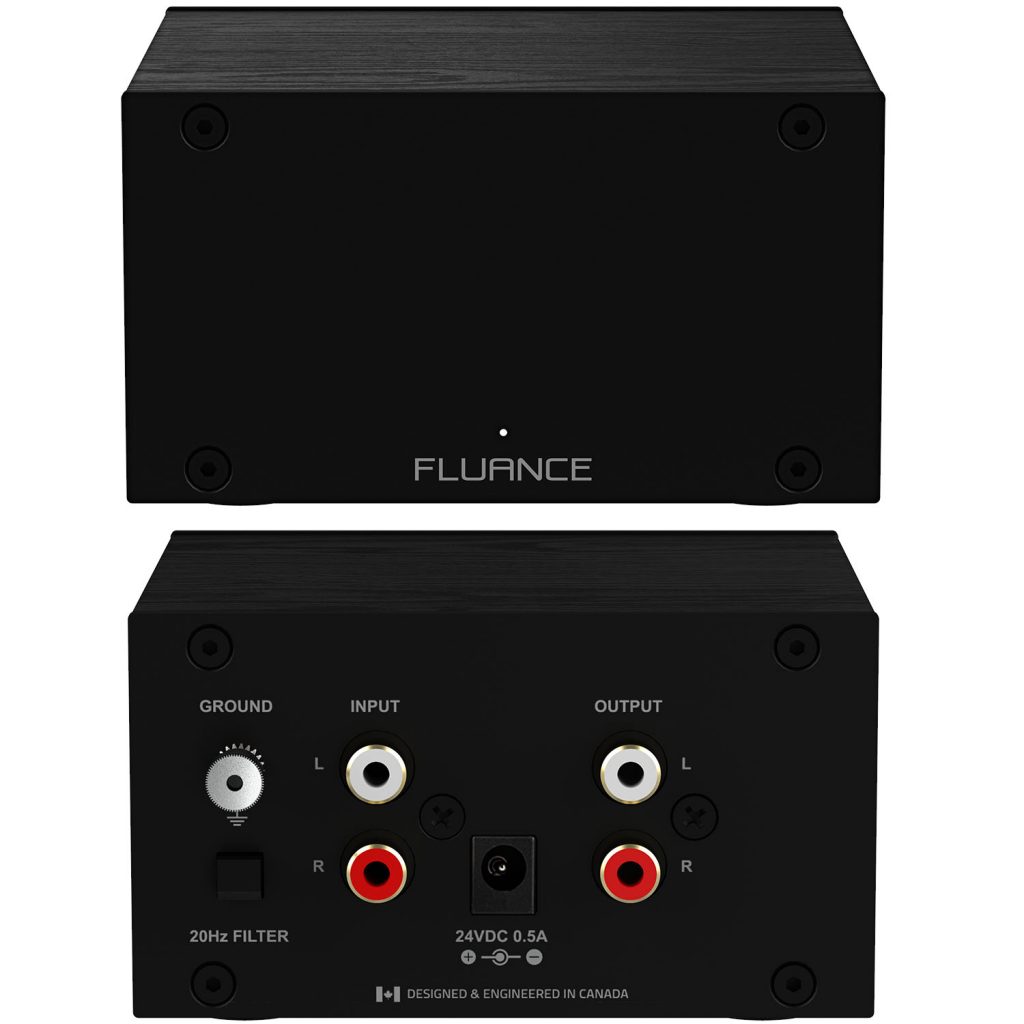
Preamplifier
Amplifier
Speakers
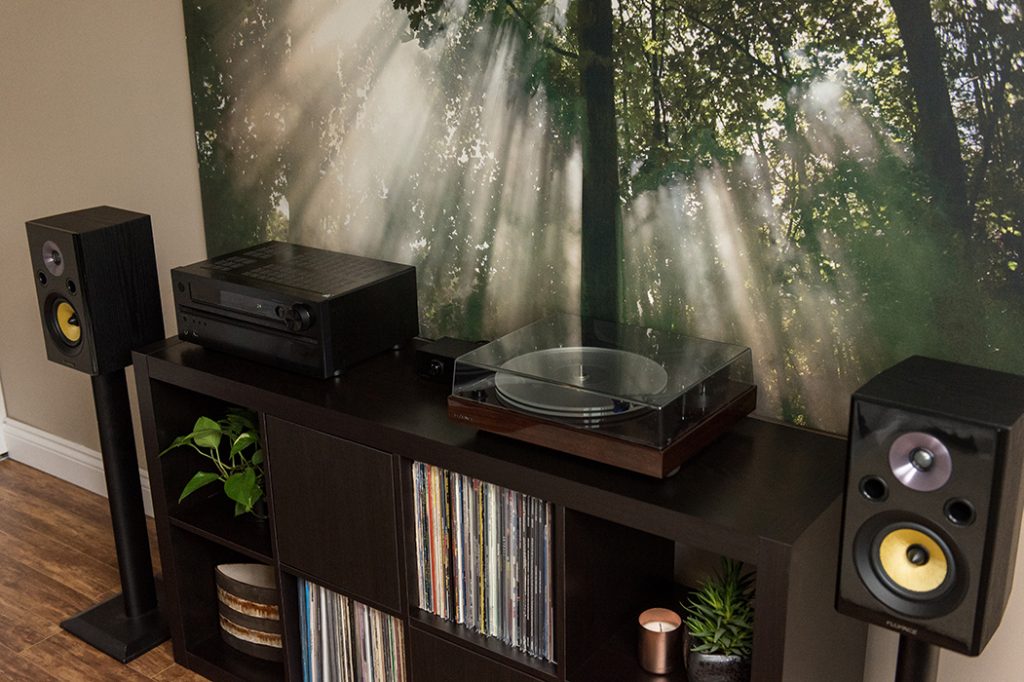
In order to play a record, y'all will need a combination of the components listed above to get started. Depending on the setup you are looking to create there are several options for you to consider. Some of the components are built into each other allowing for a more compact setup. The setup you choose volition largely be determined by upkeep, the physical space you have available, integration with other home audio components, and the type of music experience you are looking for.
Turntable
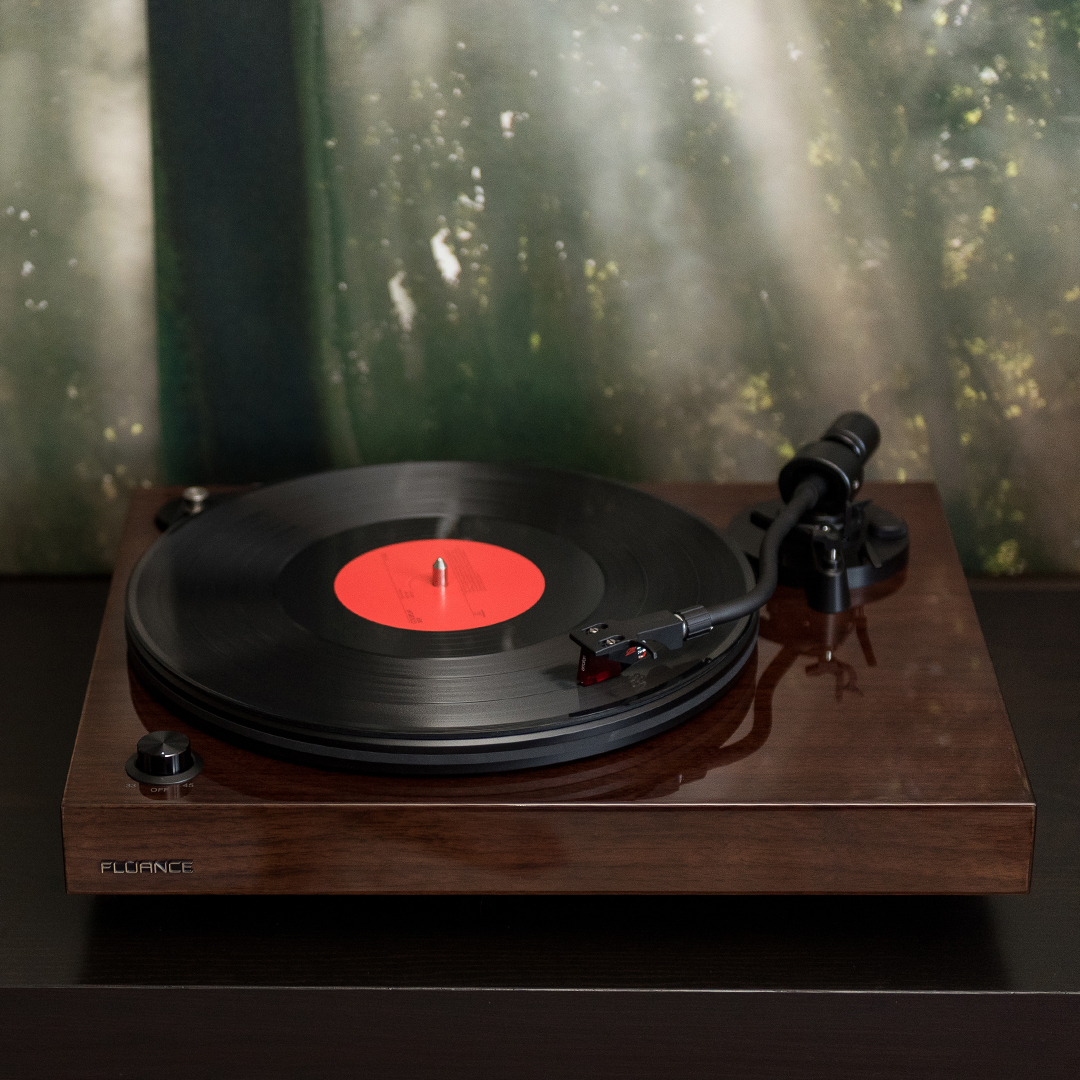
At the middle of your record playing experience is the turntable. The primary job of your turntable is to spin your records at a consistent speed allowing the record grooves to be tracked by your stylus/needle and transform that information into an electrical bespeak. When it comes to turntable purchasing there is a vast range in pricing, which is mostly determined by components, features, build quality, and specifications.
Amplifier
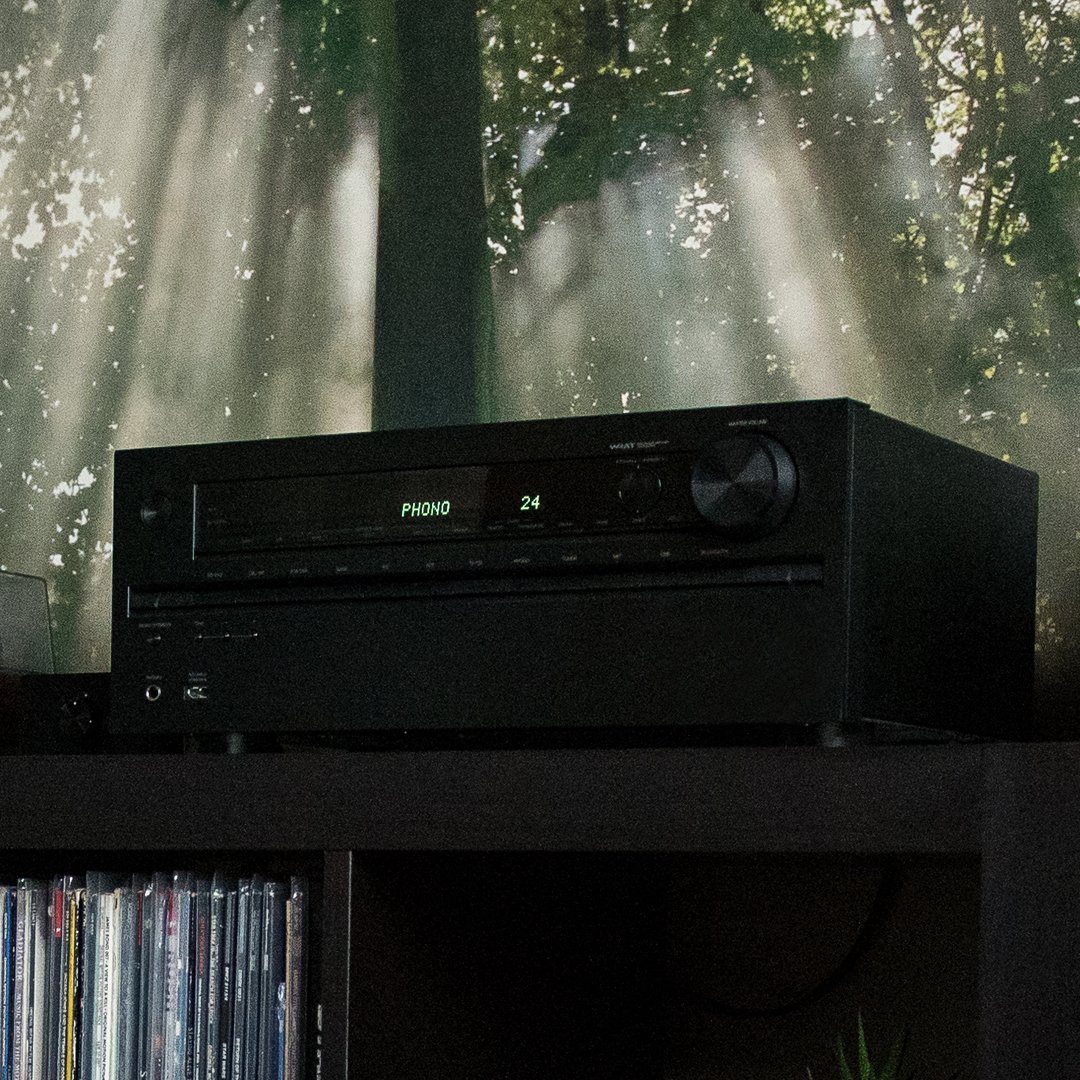
One time your accept a turntable and pre-amp you lot will need an amplifier to connect to the preamplifier in gild to boost the signal to a line level signal. You could employ an A/V receiver, dissever amplifier, or powered speakers that have a built-in amplifier (different than pre-amp). When choosing an amplifier, you have many considerations to have into account as they range drastically in toll and features. Some A/5 Receivers also accept a built-in pre-amp allowing yous to plug your turntable directly into it without needing a split up pre-amp.
Preamplifier
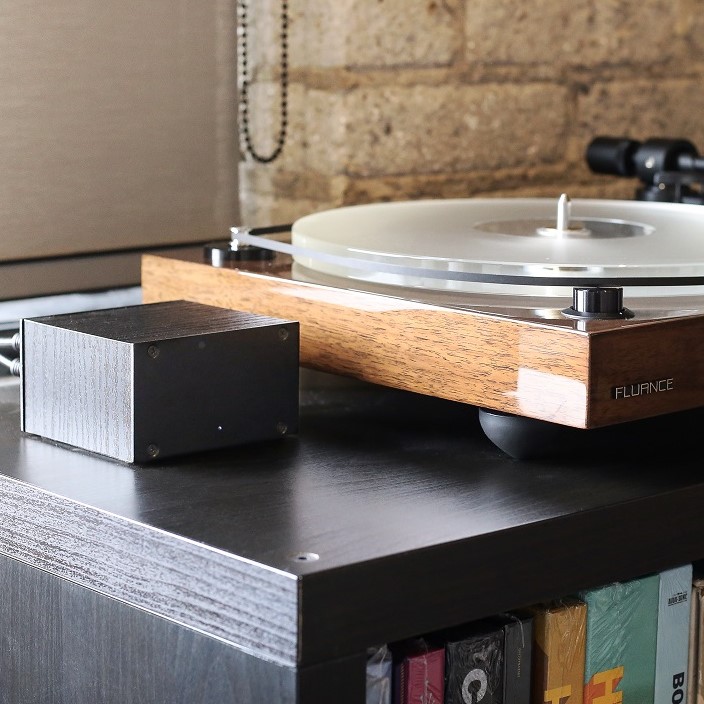
The function of a phono preamp is to boost the depression voltage bespeak that your cartridge produces and amplify that music signal to be appropriate for your receiver/speakers. You lot volition need a preamp as part of your turntable system in one of 4 places. 1. Built into your A/V receiver– indicated by a "PHONO" input two. Congenital into your powered speakers – indicated by a "PHONO" input iii. Built into your turntable iv. A separate outboard component
Speakers
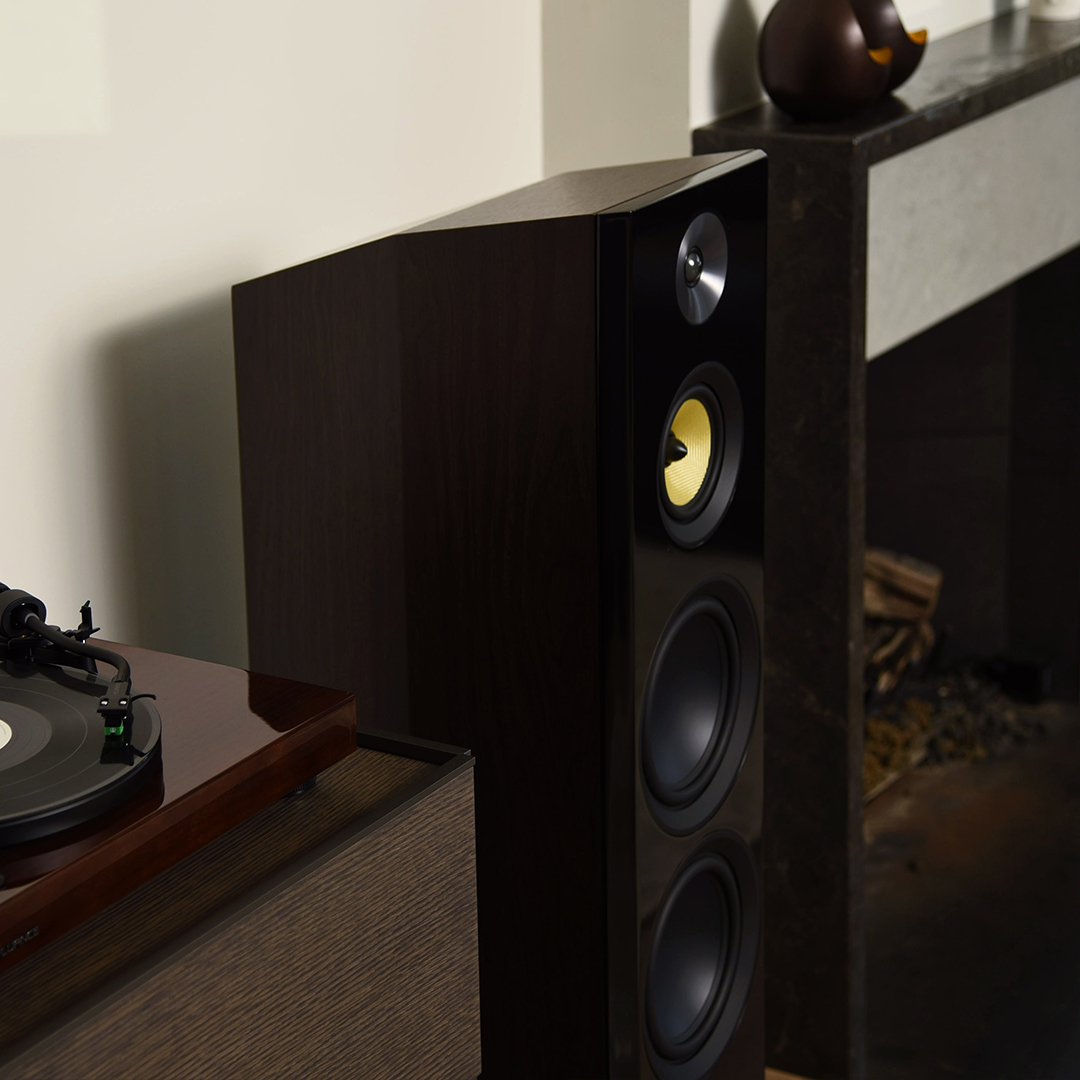
You will need some kind of speakers to play the music from your turntable. Your main choices are passive or powered speakers. Passive speakers do non have their own built-in amplifier and are powered by a separate amp such equally an A/V receiver. These speakers are connected via speaker wire to the amplifier. You tin also plug your turntable direct into powered/agile speakers which feature a built-in amplifier. Practise note that some powered speakers have a built-in amp and pre-amp, while some have just a built-in amp.
Mutual Turntable Setups
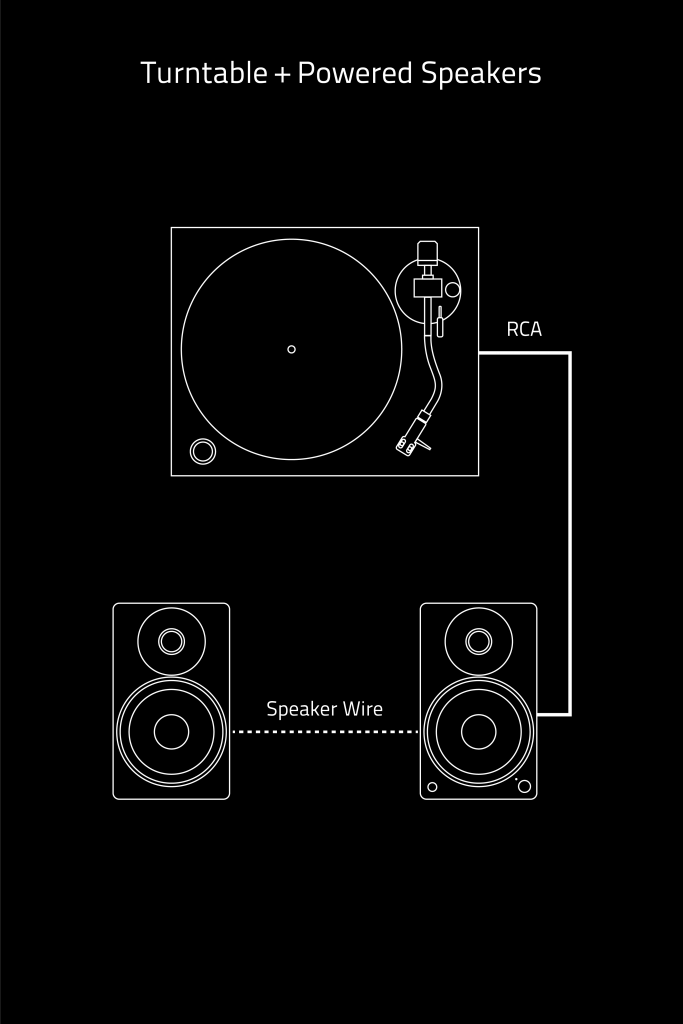
Turntable + Powered Speakers
This is the well-nigh compact turntable setup. With a preamp built right into your turntable, you would simply plug your turntable into your powered speakers via an RCA cable. The powered speakers would have its own integrated amplifier so no other components are required which is perfect for smaller spaces or if you just want a more minimal and piece of cake to use setup. Do notation that non all turntables take built-in preamps then if you want this compact setup ensure your choice of turntable has one built-in.
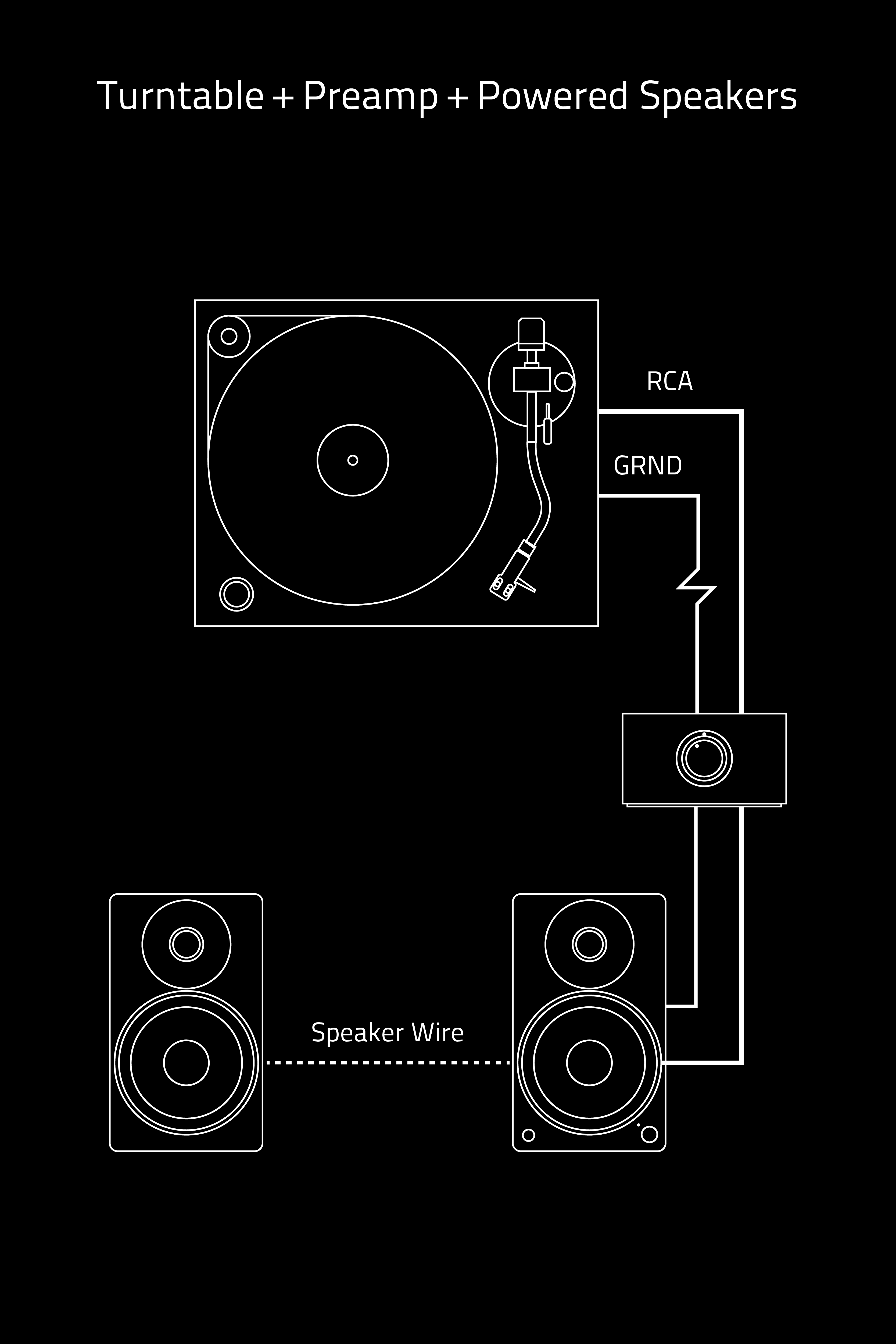
Turntable + Preamp + Powered Speakers
This setup adds a separate preamp into the mix. This gives y'all flexibility for a more customized sound as well as removing more electronics from your turntable signal path allowing yous to have a cleaner signal. With the dissever preamp you lot will also need to add a grounding wire from the turntable to the preamp, and the preamp to the powered speakers to avoid any buzzing or humming noise. You can reach this setup with turntables that do not have a congenital-in preamp or your turntable has a defeatable phono stage allowing you to bypass the built-in preamp
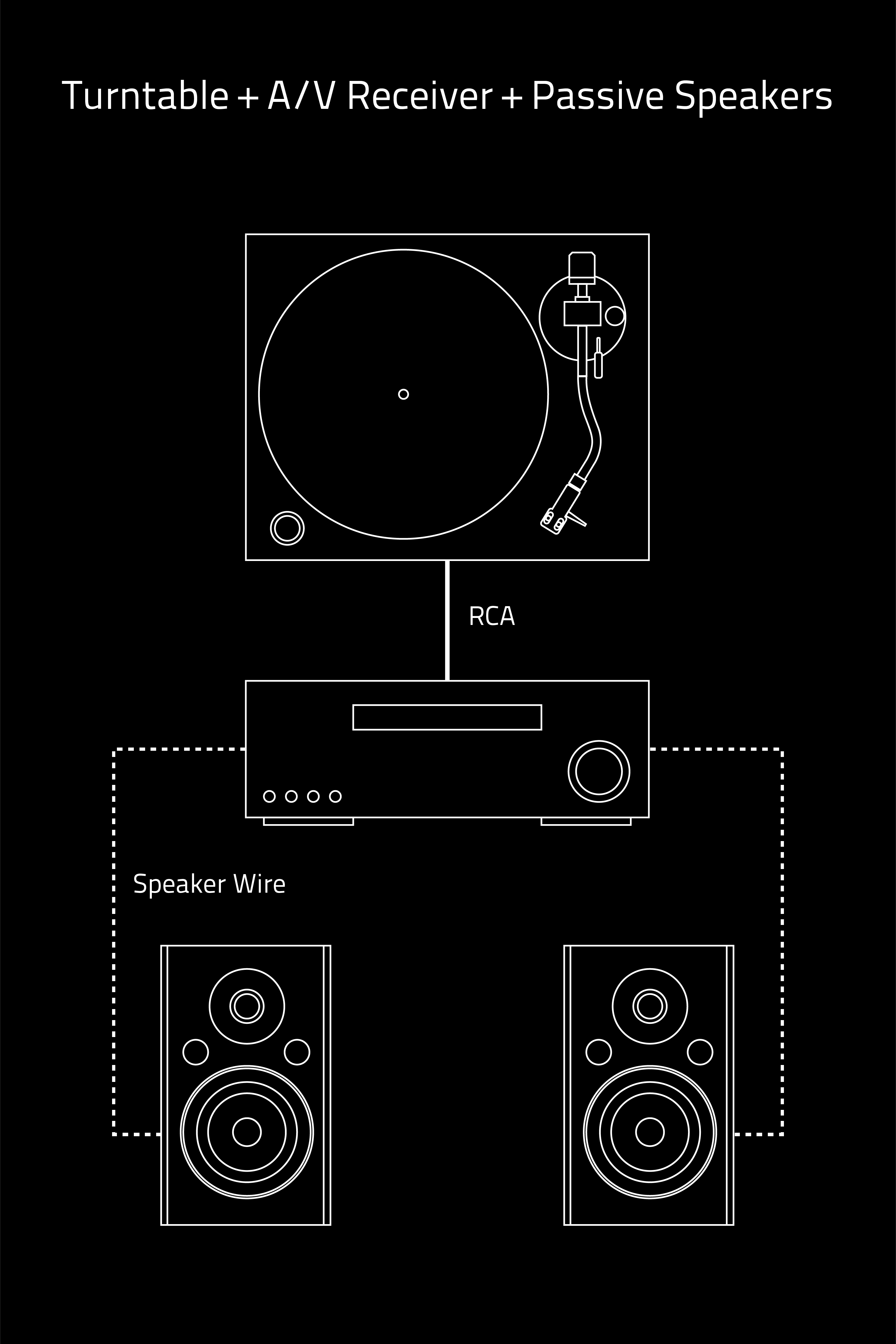
Turntable + A/V Receiver + Passive Speakers
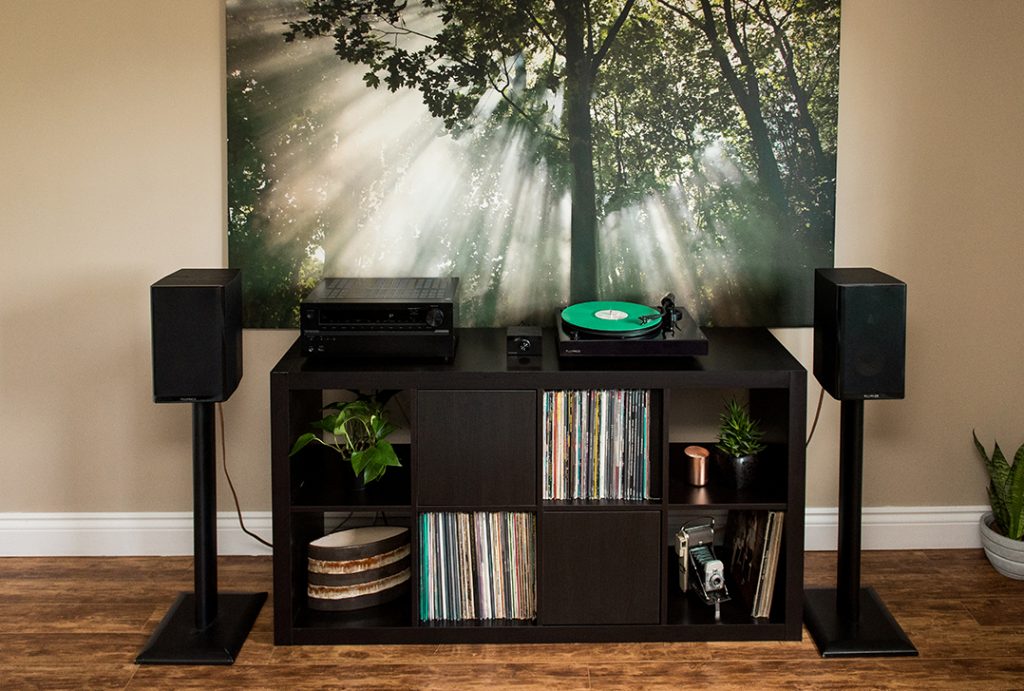
One of the most common turntable setups for vinyl enthusiasts. You lot would plug your turntable with congenital-in preamp into your receiver via an RCA cable. Your receiver would then exist plugged into 2 or more than speakers. This setup allows yous to easily plug into an existing speaker setup that may be multi-purpose such as home theater watching or wireless music streaming. Some A/V receivers have a congenital-in preamp allowing you to featherbed your turntable preamp, or connect a turntable without a congenital-in preamp to it.
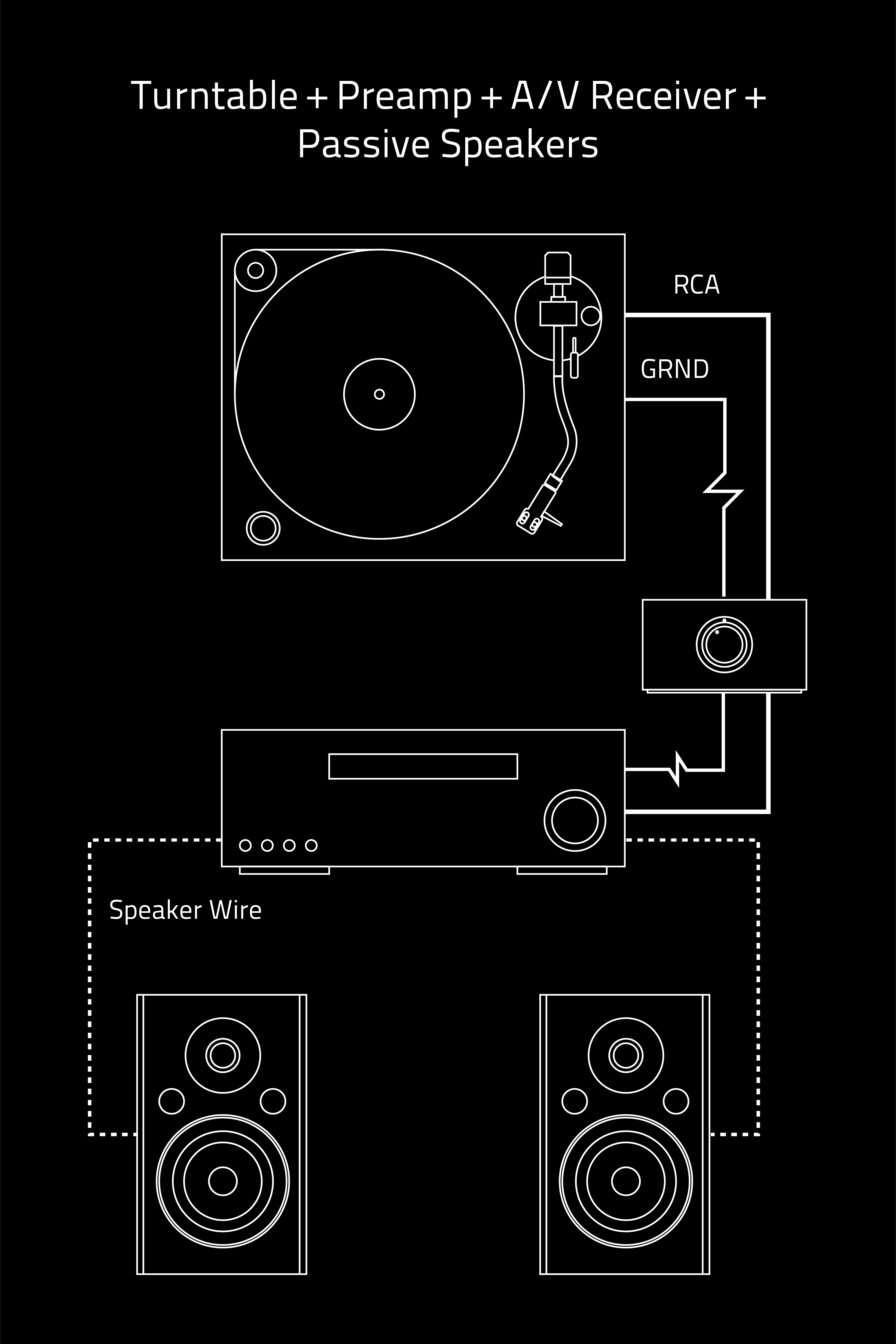
This is the most separate component-heavy of the setups . Many hardcore enthusiasts opt for this route equally it allows for the nigh customization and upgrade-power of their systems. Choosing this setup allows you to supercede and upgrade specific components over fourth dimension to get the exact sound performance desired.
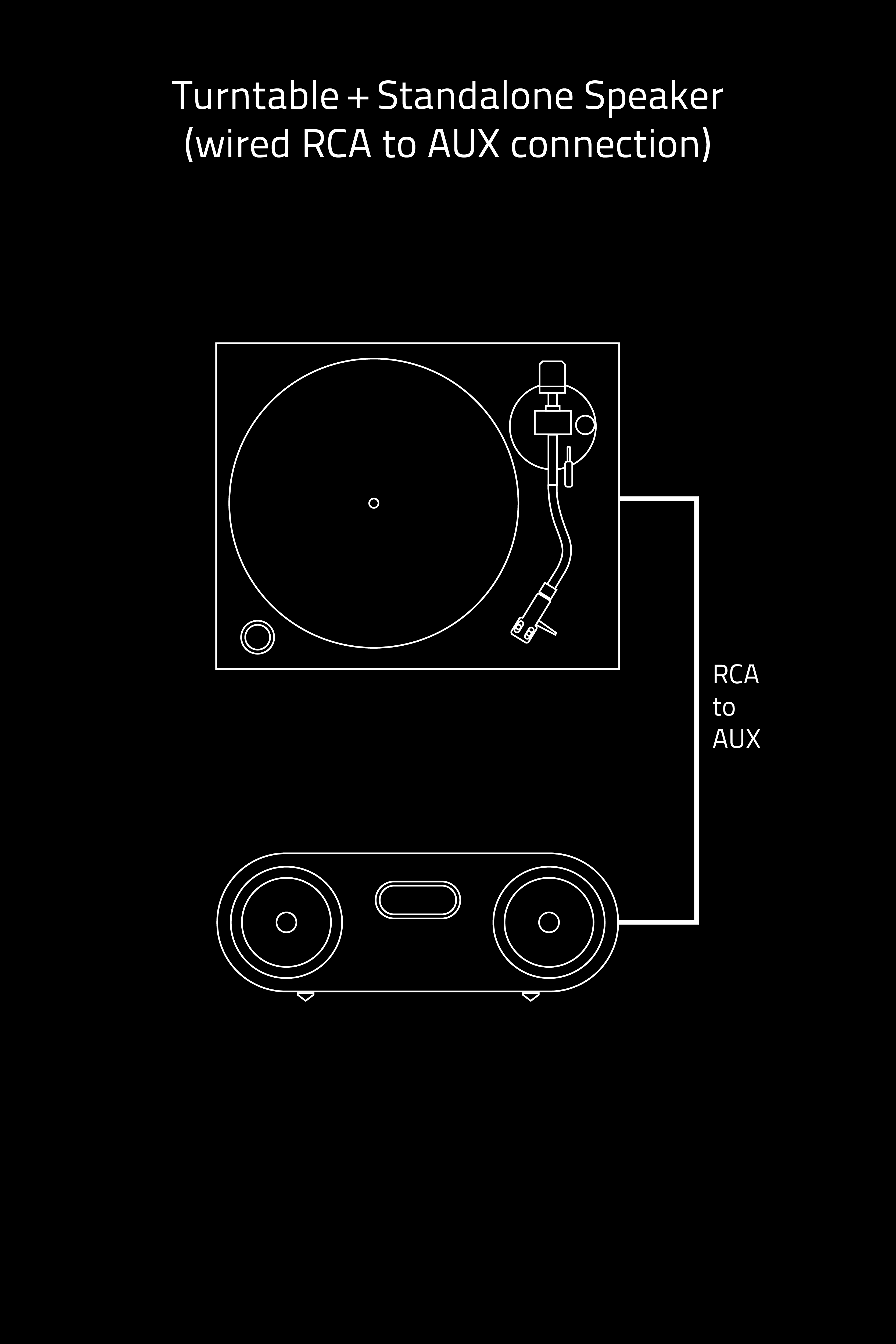
Turntable + Standalone speaker (wired RCA to aux connectedness)
This setup is the same in principle equally the turntable + powered speaker setup. The master difference here is an even more meaty setup. The biggest drawback of this setup is not achieving proper stereo separation in your soundstage. For utter simplicity even so some listener opt for this setup.
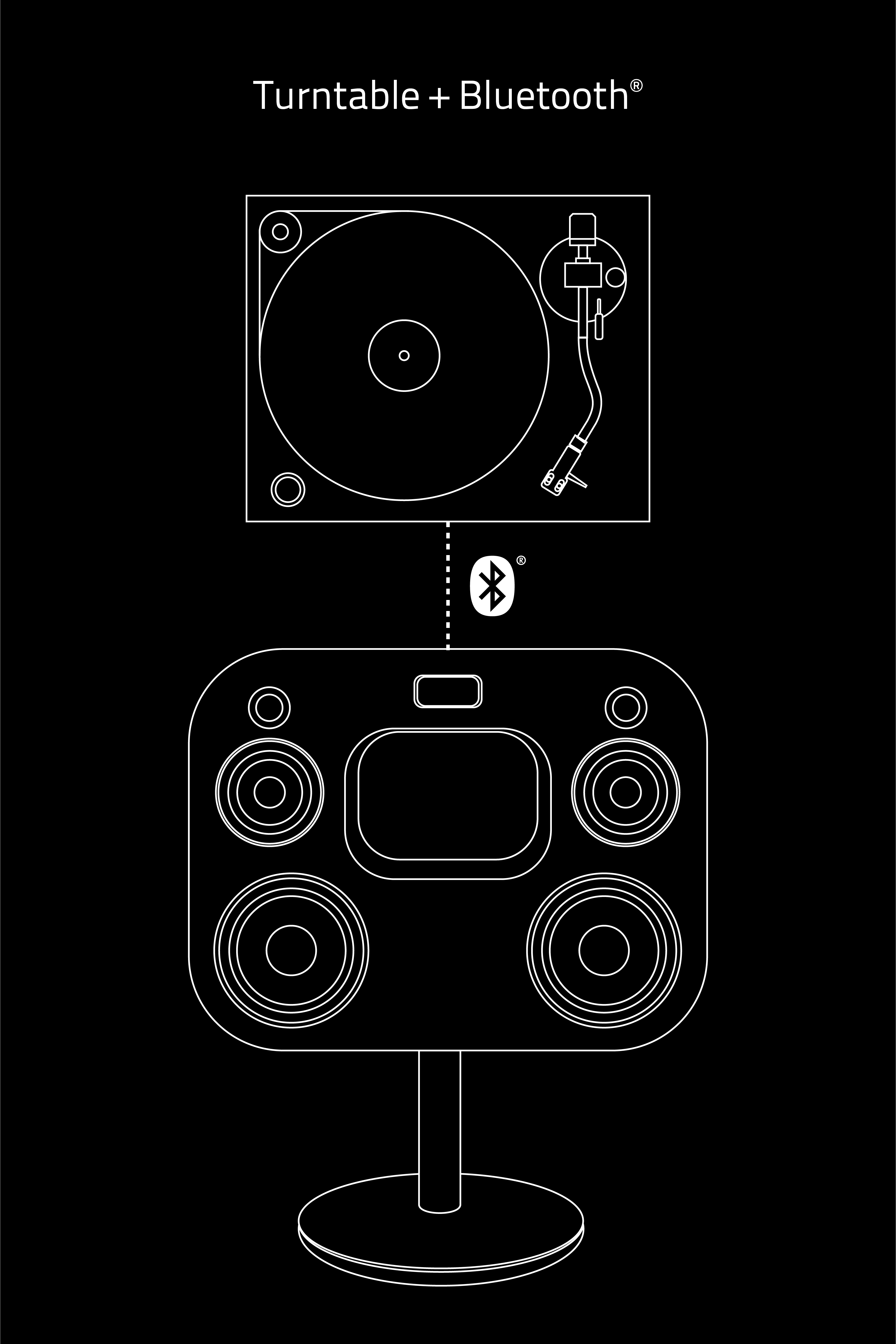
Turntable + Bluetooth speaker
Y'all can connect a turntable to a wireless speaker using a Bluetooth transmitter and a RCA male to 3.5mm stereo female person adapter. This would mainly exist done if you wanted your speakers further apart without wanting to using cables to connect them. While possible to do, we do not recommend this blazon of setup. Due to wireless compression, wireless audio may not maintain the loftier standard of audio quality obtained from vinyl.
Video Setup Guides For Common Turntable Setups
How Does a Turntable Play Records?
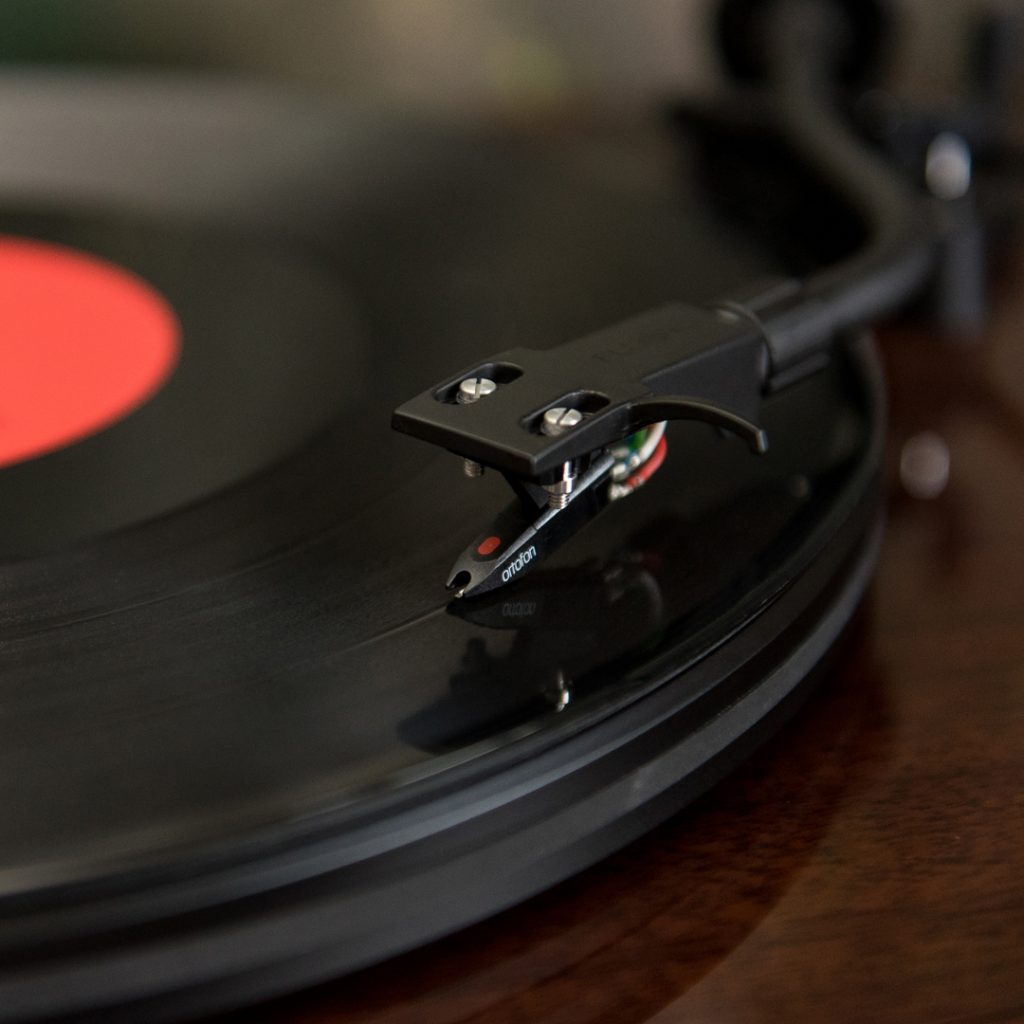
A tape is a vinyl platter with a groove cut in a spiral pattern effectually its surface. The needle, or stylus, is placed at the edge of the record and is pulled into the groove as the turntable'south platter rotates. The shape of the record's groove causes the stylus to vibrate up and down and from side to side. The turntable'south cartridge translates these concrete vibrations into electrical signals that are transmitted to the phono preamp and so to preamp and amplifier.
The signal generated past the stylus is very weak. It requires boosted amplification to get to what is called "Line Level". The function of a preamp is to dilate that weak indicate from the stylus into a betoken strong enough to be processed by the primary power amplifier and played at an appropriate level through your loud speakers. More on that subsequently…
Vibration & Turntable Isolation
The stylus has no way of differentiating between the vibrations caused by the record groove and vibrations from external sources. This makes it necessary to isolate the turntable every bit much as possible from sources of outside vibration—primarily the speakers, which tin bear on the stylus when the volume is sufficiently loftier. This activeness can cause an unpleasant hum or howling noise. For this reason, information technology's best to place the turntable at some distance from the speakers, or behind them.
When information technology comes to arranging your setup, you will desire to avoid placing your turntable and speakers on the same surface (i.e. not on the same shelf/panel). While often visually appealing and space saving it increases the likelihood of vibrations from the speakers beingness picked up past your stylus leading to undesirable sound performance. For this reason many enthusiasts opt for floorstanding loudspeakers or using speaker stands for bookshelf speakers.
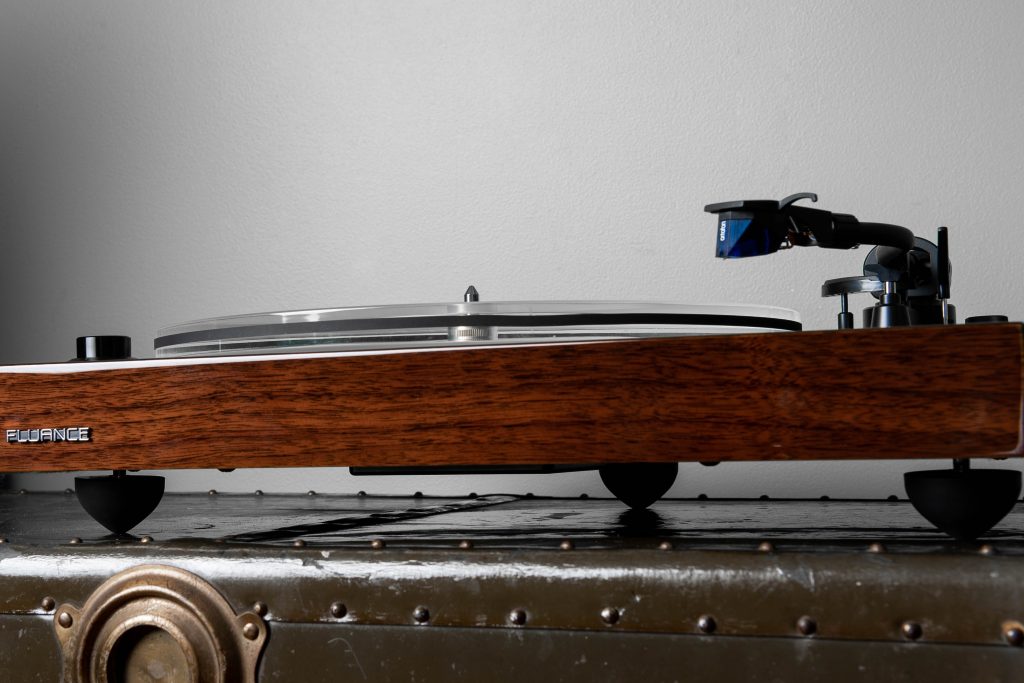
Designers of quality turntables practice their best to prevent vibrations from coming upwards through the turntable and the record. They use two basic approaches to accost this issue:suspension and mass. The suspension approach suspends the platform, or plinth, to mechanically isolate it from the residue of the turntable as much as possible. The mass approach makes the turntable heavier to suppress the vibrations reaching the stylus. Virtually good turntables incorporate feet fabricated from pointed metal spikes or soft, rubbery textile to help preclude vibrations from coming up into the turntable. Aftermarket accessories, such as sorbothane feet or isolation platforms, can also aid minimize vibration.
How a Platter Impacts Playback
A turntable is equanimous of ii sets of mechanically separate components. The base, motor and platter belong to one set, while the arm and cartridge belong to the other set.
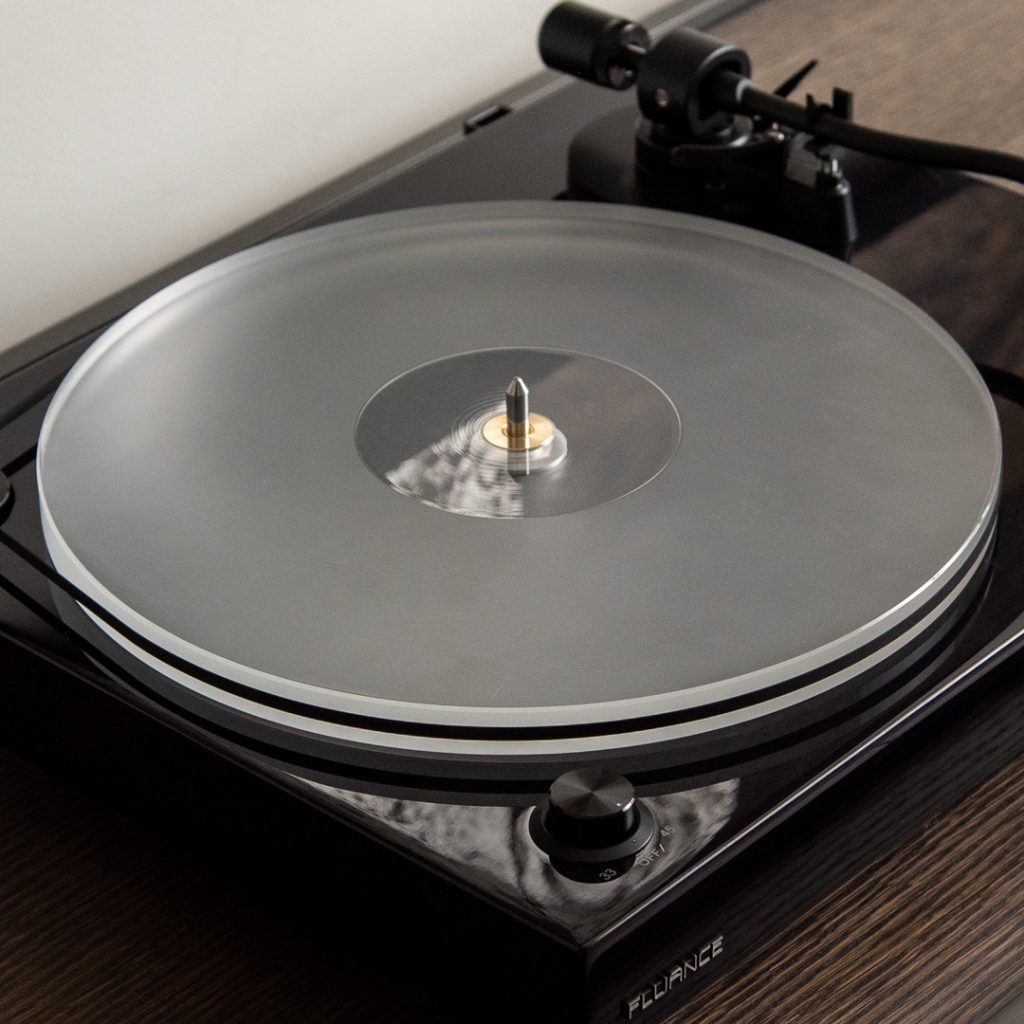
Platters are oft made of heavy materials like metal, acrylic or high-density fiberboard (HDF). A heavier platter may take a few seconds longer to get up to speed, merely its flywheel consequence will proceed its speed more consistent when a record is playing.
To aid the record stay put on the platter, and to reduce vibration coming through the platter, a mat is used between the platter and the record. Mats are oft fabricated from felt, cork, leather, rubber or acrylic, and these materials take slightly dissimilar effects on a turntable'southward sound.
Some platters practice not require the addition of a mat, such as acrylic platters which would have the vibration damping backdrop by default.
What Turntable Stand Is Best?
A stand is an important consideration for a turntable setup, since it isolates the turntable from the flooring. It might exist a defended turntable stand, a wall-mounted stand, the elevation shelf of an audio equipment rack, or simply a adept, potent shelf or table. Regardless of the specific solution, the master goal is to maximize the turntable's mechanical isolation.
Many turntable users also take into account storage of their vinyl collection when choosing stands or consoles likewise. Some consoles are fabricated specifically for records and tape players while others are appropriated into record player stands. As mentioned previously, as long as the stand works to isolate the turntable y'all are open to many options.
One of the virtually mutual storage solutions/stands is the Ikea Kallax unit. It offers numerous colors and sizes that arrive very handy for your turntable, components and growing vinyl drove. As your equipment and collection grows you tin always upgrade to defended stands or audio racks. When storing your records be sure that you follow proper best practices to keep your records pristine. Y'all tin can learn more about that in our vinyl cleaning and storage guide.
Amplification: What is a Phono Preamp and why practice you lot need one?
The signal from a phono cartridge is very weak and must be amplified and equalized before it is sent to the organization's main preamp and amplifier. This can be done in a divide phono preamp, but many receivers and stereo preamps have a phono preamp congenital in, and a defended phono input. Without a phono preamp, the sound from the turntable will be very low in level, and will take fashion too much treble and not enough bass.
Several types of turntable cartridges be, with moving magnet (MM) and moving-whorl (MC) types existence the about common. The signal from an MC cartridge is much weaker, typically 0.2 millivolts maximum, versus about 5 millivolts for a typical MM cartridge, so it requires extra distension or a transformer to become its audio bespeak up to a usable level. Most split phono preamps can handle MM and MC cartridges, but the phono preamps built into receivers and stereo preamps are oftentimes MM-only. Different cartridges sometimes work a lilliputian better with different amounts of resistance and capacitance added to the phono preamp input, and the most avant-garde phono preamps will permit you lot adjust the load capacitance and resistance to suit the cartridge manufacturer's recommendations.
Next to the phono input jacks on the phono preamp, primary preamp or receiver you'll find a screw last, which might be a standard screw or a thumbscrew. This is for connecting a ground wire to the turntable. The ground wire is intended to help reduce hum. Once in a while, though, the footing wire tin can actually increase hum, so if you lot take a hum trouble with your turntable, try disconnecting the ground wire to see if that improves it.
Belum ada Komentar untuk "Turning a Record Player Into a Spinning Art Wheel"
Posting Komentar